How Pipe Fabrication Supports Industrial Projects
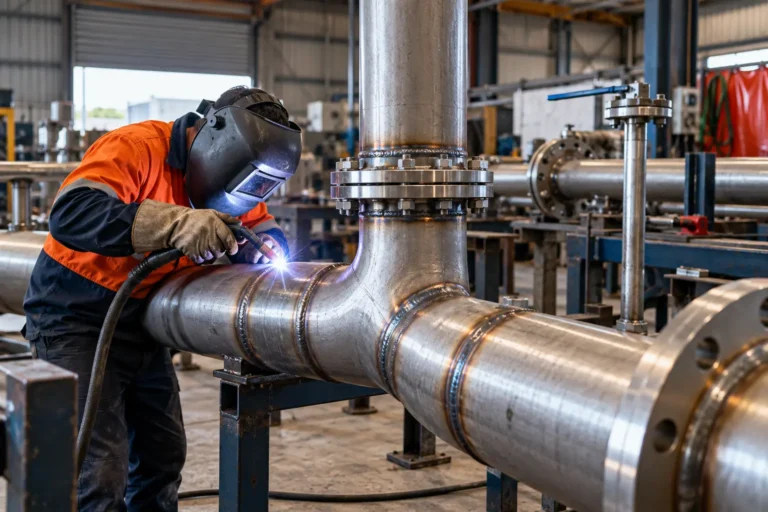
Pipe fabrication plays an important role in industrial, commercial, and engineering projects where reliable piping systems are required.…
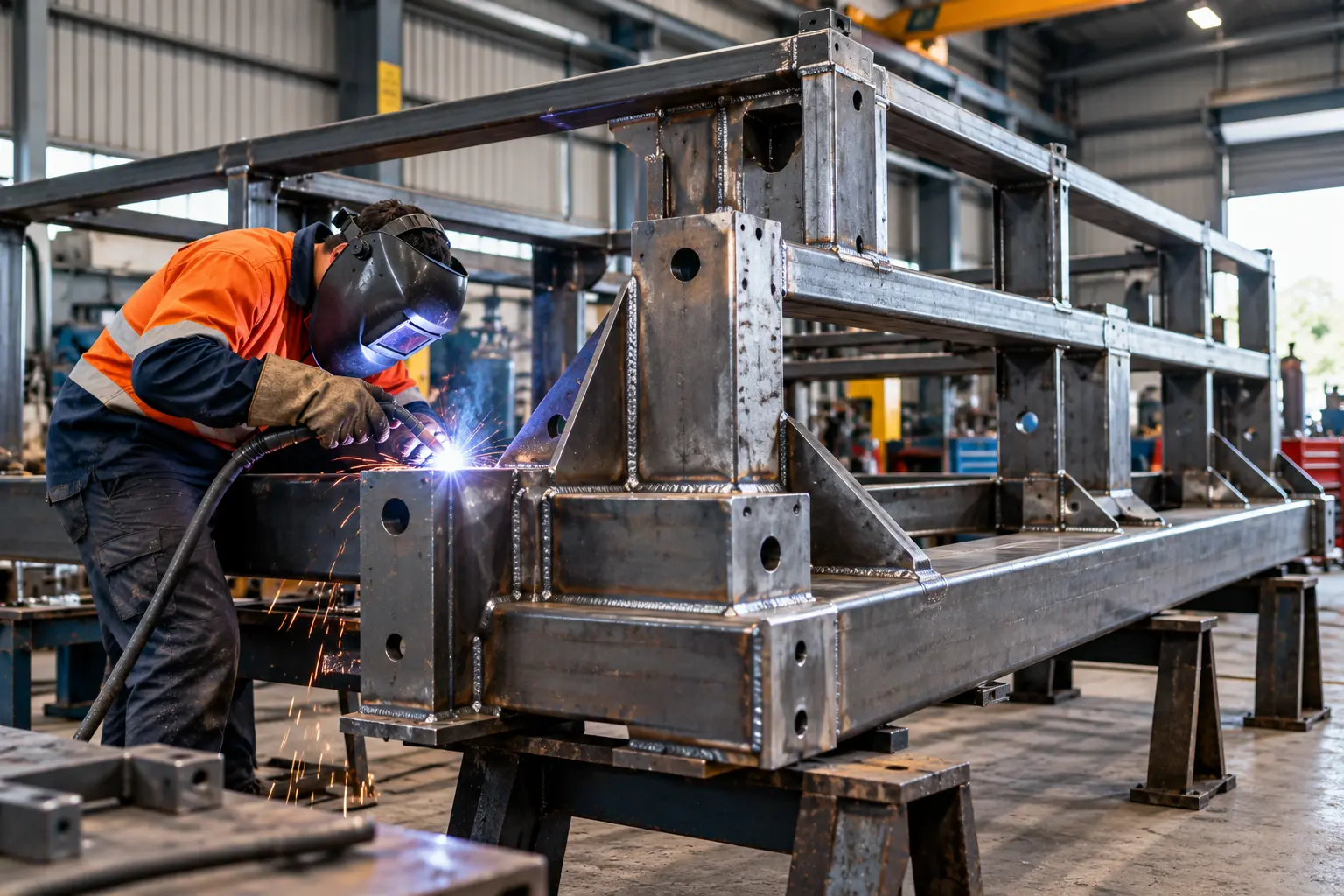 Custom Metal Fabrication
Custom metal fabrication is the process of manufacturing metal components and assemblies according to specific project requirements. Unlike standard, ready-made products, custom-fabricated components can be designed around particular dimensions, applications, installation conditions, and functional needs.
Industries such as construction, engineering, manufacturing, and industrial operations often require metal components that fit unique layouts or perform specific tasks. These may include steel frames, brackets, support structures, equipment bases, platforms, guards, and specialised assemblies.
Custom fabrication combines material preparation, cutting, drilling, forming, fitting, welding, and finishing to produce the required components. The processes used depend on the material, design complexity, production requirements, and intended application.
For industrial businesses, choosing a suitable fabrication approach can help address practical challenges that standard components may not solve. Careful planning and clear technical information are important for achieving the required results.
One of the main benefits of custom metal fabrication is the ability to produce components for a specific application. Industrial facilities often have unique space limitations, equipment arrangements, access requirements, and operating conditions.
A standard component may not fit the available space or connect correctly with existing equipment. Custom fabrication allows dimensions, connection points, and component arrangements to be developed around the project’s documented requirements.
For example, a business may need a mounting bracket that fits an existing machine, a steel frame that accommodates particular equipment, or a support assembly designed for a restricted installation area. A custom solution can be developed after the relevant measurements and requirements have been assessed.
Accurate measurements, suitable material selection, and appropriate engineering input are essential when developing these components. Where structural performance or specialised operating conditions are involved, the design should be reviewed and approved by the appropriate qualified professionals.
Industrial projects frequently involve multiple components that must work together. If individual parts are manufactured with incorrect dimensions or poorly communicated connection details, the assembly process may become more difficult.
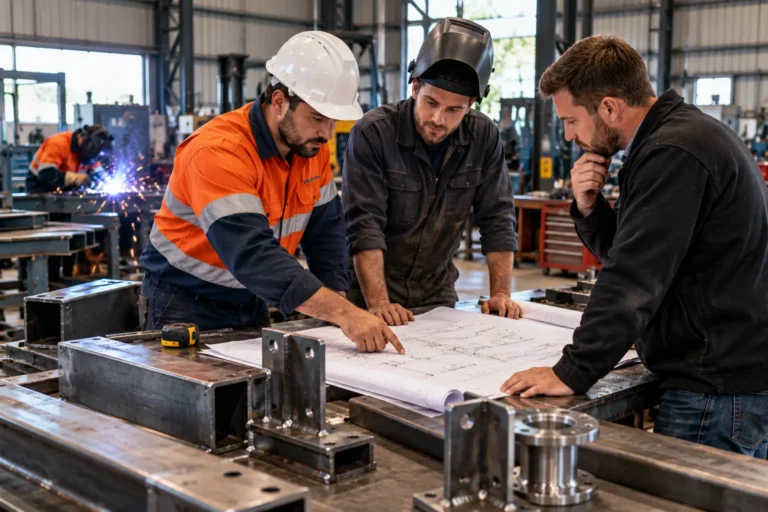
Custom fabrication supported by clear drawings helps communicate the dimensions, positions, and relationships between components before manufacturing begins. This allows fabrication teams to prepare parts according to an agreed design and identify questions that need clarification.
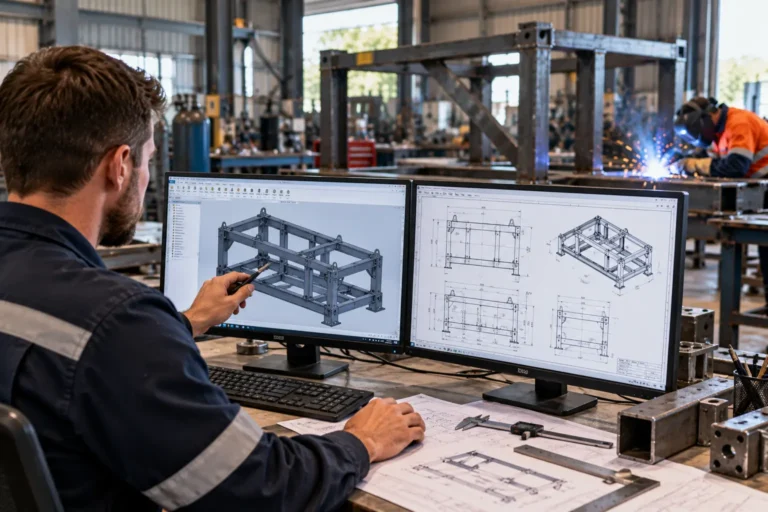
CAD modelling can be particularly useful for assemblies involving multiple parts or complex connections. Three-dimensional models help visualise how components fit together, while fabrication drawings communicate the information required for production.
Reviewing the design before manufacturing may help identify dimensional conflicts, access limitations, or connection issues. Resolving these concerns early can reduce unnecessary modifications during assembly and installation.
Actual accuracy still depends on correct project information, suitable equipment, skilled workmanship, and appropriate quality checks. Drawings should be verified against the relevant specifications before fabrication starts.
Manufacturing plants and industrial facilities use a wide variety of machines, tools, and production systems. These operations may require custom frames, mounting plates, equipment supports, protective guards, brackets, and other fabricated metal components.
Custom fabrication can help businesses address equipment layouts and installation requirements that differ from standard configurations. Components can be prepared according to specified dimensions and connection arrangements, subject to the relevant design requirements.
For example, an industrial facility may require a fabricated support frame for a particular piece of equipment. The design process may need to consider available space, mounting points, maintenance access, and the loads specified by the responsible engineer.
It is important not to treat fabrication as a substitute for engineering assessment. Equipment supports, guards, platforms, and load-bearing components may require calculations, testing, or formal approval depending on their intended use.
When these requirements are established early, fabrication teams can better understand the scope of work and produce components that align with the approved design.
The choice of metal can influence the strength, weight, durability, appearance, and maintenance requirements of a fabricated component. Different projects may require different materials depending on the operating environment and the function of the finished product.
Steel is widely used in fabrication because it is available in many forms and can be processed into a broad range of components. Stainless steel may be appropriate for applications where corrosion resistance or hygiene requirements are important. Aluminium may be considered when lower weight is a priority, provided its properties are suitable for the intended use.
Material selection should account for factors such as expected loads, exposure to moisture or chemicals, operating temperatures, wear, and compatibility with other components. The required grade, thickness, and finish should be confirmed before production.
For projects with specific technical or compliance requirements, material specifications and any necessary certification should be discussed with the responsible parties. Choosing a material based only on price or appearance may not meet the project’s functional needs.
Custom fabrication requires coordination between design, material procurement, production, inspection, and delivery. When the project scope is clear and the drawings are complete, the fabrication team can plan these activities more effectively.
Detailed measurements and material specifications help identify what needs to be purchased and manufactured. Depending on the project, cutting plans and production layouts may also support more efficient material use.
Reviewing the design before production can help reduce avoidable mistakes caused by missing dimensions or unclear connection details. It may also reduce the need for rework when components reach the assembly stage.
However, custom fabrication does not automatically guarantee lower costs or faster delivery. Project complexity, material availability, production quantities, design changes, and inspection requirements all influence the final schedule and price.
Providing accurate information at the beginning and responding promptly to technical questions can help keep the process organised and reduce avoidable delays.
Industrial facilities may need to repair existing components, modify equipment arrangements, or replace parts that are no longer suitable. Custom fabrication can provide a practical option when standard replacement products are unavailable or do not match the existing installation.
A replacement bracket, mounting plate, or support component may be manufactured to match verified measurements and relevant technical requirements. Before work begins, the existing component should be assessed to understand why it failed or requires modification.
Repairs involving structural members, pressure-containing equipment, lifting devices, machinery guards, or other safety-critical components require particular care. The suitability of a repair or replacement should be established by appropriately qualified professionals where necessary.
Accurate measurements, photographs, existing drawings, and details about the operating conditions can help the fabrication team understand the problem. These details support a more informed discussion about possible solutions.
Quality control helps confirm that fabricated components meet the agreed requirements. Depending on the project, checks may include dimensions, alignment, material identification, weld appearance, assembly fit, and specified finishing details.
Inspection requirements should be determined before fabrication begins, especially for components that must meet defined technical standards. Some projects may require additional testing, inspection records, material documentation, or formal acceptance by a client or engineer.
Checking components at suitable stages can help identify discrepancies before they affect the wider assembly. Clear documentation also provides a useful reference when questions arise during installation or future maintenance.
Quality depends on the complete process, from interpreting drawings and preparing materials to completing fabrication and checking the finished work. Skilled workers, appropriate equipment, and effective communication all contribute to consistent results.
Metal fabrication involves potential hazards associated with welding, cutting, grinding, heavy materials, hot surfaces, and powered equipment. Safe work practices should be established according to the tasks being performed and the conditions of the workshop or site.
Appropriate controls may include equipment inspections, suitable personal protective equipment, ventilation, safe lifting arrangements, organised work areas, and procedures for managing hot work. Workers should understand the hazards associated with their tasks and receive appropriate instruction.
Custom components must also be assessed for their intended application. Where a fabricated product forms part of a safety system, structural assembly, machine guard, or other safety-critical installation, applicable design and compliance requirements should be followed.
For projects in New Zealand, businesses should consider relevant workplace health and safety obligations, technical standards, and project specifications. The necessary approvals and inspections should be confirmed with the responsible parties.
Selecting a fabrication provider involves considering more than the initial quotation. Relevant experience, technical capabilities, communication, quality practices, and the ability to understand the project scope are all important factors.
Before requesting a quote, prepare any available drawings, dimensions, photographs, material specifications, quantities, and delivery requirements. Explain how the components will be used and identify any site access or installation considerations.
Ask the provider to clarify which services are included, such as CAD modelling, fabrication drawings, material supply, welding, finishing, inspection, transportation, or on-site work. Confirming these details helps avoid misunderstandings about responsibilities and costs.
It is also useful to discuss the expected timeframe and how changes will be handled. Design revisions, material availability, and additional inspection requirements can affect production schedules, so these factors should be considered during planning.
SK Metal Works Ltd. provides custom welding and fabrication, mechanical engineering solutions, CAD modelling and drafting, workshop and on-site services, and skilled manpower support in Christchurch, New Zealand.
We understand that industrial projects can involve different materials, dimensions, installation conditions, and technical requirements. A clear understanding of the job helps establish a practical approach to fabrication and project coordination.
Whether you require custom metal components, fabricated steel assemblies, engineering drawings, or support for workshop and site activities, discussing the project requirements early can help identify the information needed to move forward.
Our focus is on practical solutions, careful workmanship, attention to detail, and clear communication throughout the project process.
Planning an industrial fabrication project or need a custom metal component? Contact SK Metal Works Ltd. to discuss your requirements and request a quote.
Ready to discuss your project? Contact SK Metal Works Ltd. to get started.
Pipe fabrication plays an important role in industrial, commercial, and engineering projects where reliable piping systems are required.…
Understanding Your Metal Fabrication Requirements Choosing the right metal fabrication company is an important decision for construction, engineering,…
Understanding CAD in Metal Fabrication Computer-aided design, commonly known as CAD, plays an important role in modern metal…